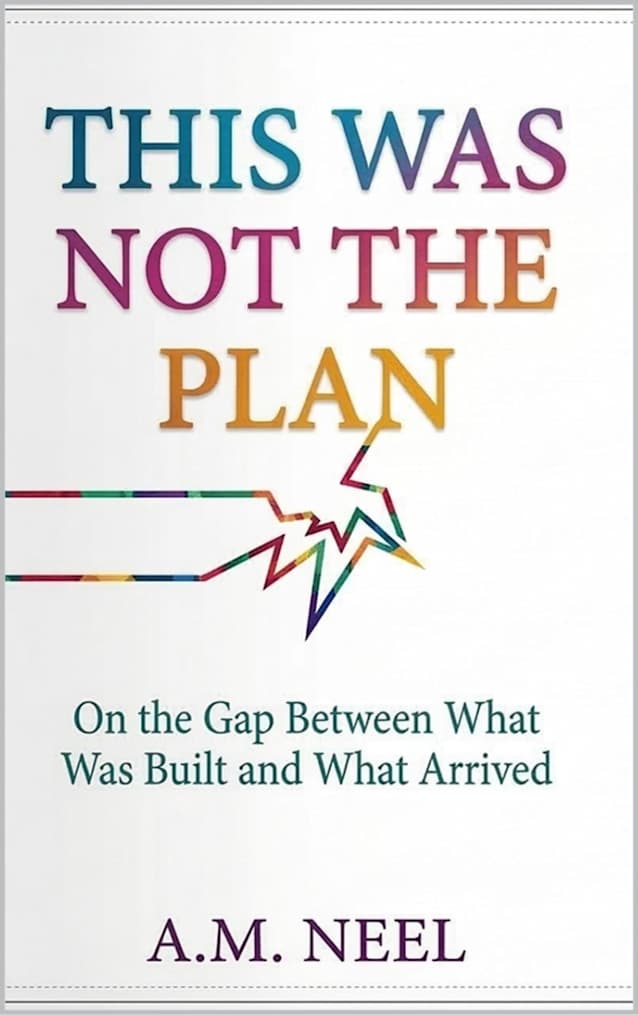
This Was Not The Plan: On the Gap Between What Was Built and What Arrived
About
The most consequential things in history were all aimed somewhere else
Johannes Gutenberg built a machine to print indulgences. He destroyed the Catholic Church’s monopoly on religious authority. A chemistry student named William Perkin tried to synthesize quinine to cure malaria. He failed, named the failure mauve, and accidentally founded the pharmaceutical industry. The Department of Defense funded a network designed to survive nuclear war. It produced the internet. Facebook was aimed at letting Harvard students rate each other’s attractiveness.
None of them hit the target. All of them hit something larger, stranger, and in several cases considerably worse.
This Was Not The Plan traces seventeen of history’s most consequential unintended consequences, from Gutenberg’s press in 1450 to Facebook’s News Feed in 2006, and asks why the pattern keeps repeating. The answer involves what the author calls the system gap: the permanent, structural space between what any institution is built to see and what the world keeps becoming. When something slips through that gap, the consequences belong to wherever it lands. The system that built it gets the invoice.
Act One follows twelve escapes across five centuries: the printing press, distilled spirits, synthetic dye, the cotton gin, CFCs, Super Glue, Play-Doh, Xerox PARC, the digital camera, ARPANET, the spreadsheet, and the social network. Act Two turns the argument on the five industries built to make the accident happen again: corporate R&D labs, the MBA case study, venture capital, private equity, and innovation consulting. The verdict is not encouraging.
Nobody planned any of this. That is the entire point